
Home » Excess Soil Landfill Restriction 2027: What Changes
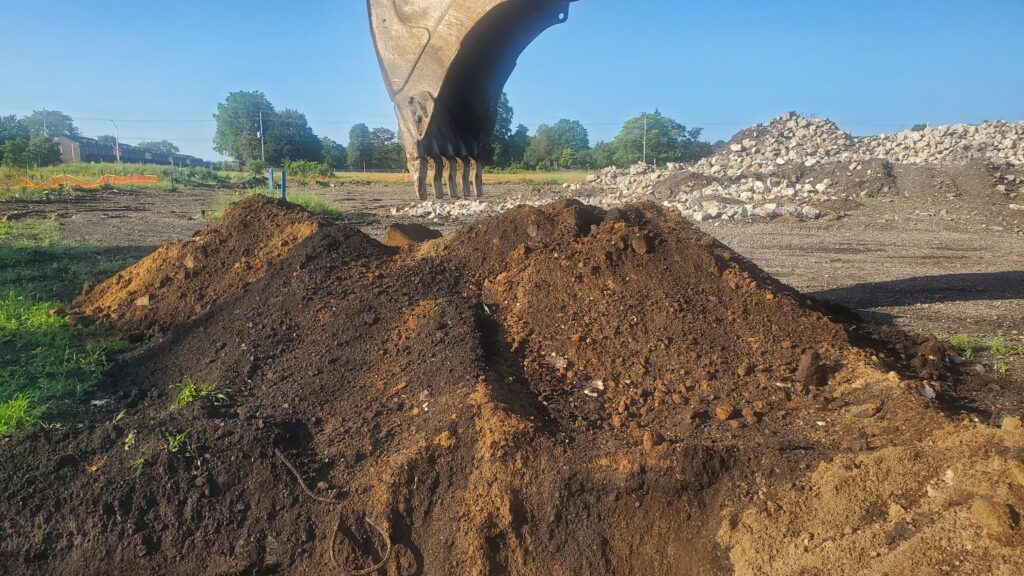
If your project will dig up and move soil in 2027, one date belongs in your schedule: January 1, 2027. From that day, Ontario generally won’t allow excess soil that meets its cleanest quality standards to be sent to landfill. That soil will need to go somewhere it can be reused instead.
For many developers and contractors, landfill has been the simple, predictable option for clean fill. That option is closing. The good news is that the change is easy to manage if you plan for it early. Here’s what’s changing, what the exceptions are, and how to get your project ready.
What’s changing
Ontario’s Excess Soil Regulation (O. Reg. 406/19) treats excess soil as a resource to be reused wherever possible, rather than a waste. One of its last pieces to take effect is a restriction on landfilling clean soil. It was originally scheduled for 2025, then postponed, and was confirmed in amendments made in 2025 (O. Reg. 235/25) to start on January 1, 2027.
In plain terms:
The exceptions
The restriction isn’t absolute. Clean soil can still end up at a landfill in a few situations:
That declaration has to be in writing and kept on file, so it isn’t a shortcut. It needs real evidence, such as sampling results or a record of the reuse options you looked at.
The restriction is about clean soil. Soil that doesn’t meet the Table 2.1 standards still has to be managed properly, but it isn’t affected by this change.
What it means for your project
The biggest impact is on timing. Finding a reuse site takes longer than booking a landfill. Reuse sites set their own acceptance conditions. They may only take certain soil types or volumes, and they usually want test results before a single truck arrives.
That makes a few things more important than before:
Projects that start excavation in early 2027 are the most exposed. If your project is in design or permitting now, this is the time to plan.
Five steps to get ready
How Peritus can help
Peritus Environmental helps developers, builders and contractors across southern Ontario manage excess soil from planning to the last load. Our Qualified Persons prepare assessments of past uses and sampling plans, characterize soil in place or in stockpiles, find suitable reuse destinations, and handle Registry filings and tracking.
On a recent large residential development in Markham, the plans included an underground parking garage, which meant a lot of soil had to come out. Before excavation started, we sampled and characterized two large existing stockpiles, then characterized a further 115,000 m³ of soil still in place. Our soil characterization report gave the project team a clear picture of soil quality up front, so destinations could be planned early instead of during excavation.